
What building a watch face with AI really takes
A complete Garmin watch face, from pixel animation to payment system, built with an AI coding assistant. What the AI did faster than any human, where it went wrong, and why research on AI-assisted programming says the human in the loop matters more, not less.

The code was the easy part
The usual story about AI and programming is about speed. Type a sentence, get a function, and a day of work shrinks to an hour. That story is true. It is also the least interesting part of what happens when a complete product is built with an AI assistant from start to finish.
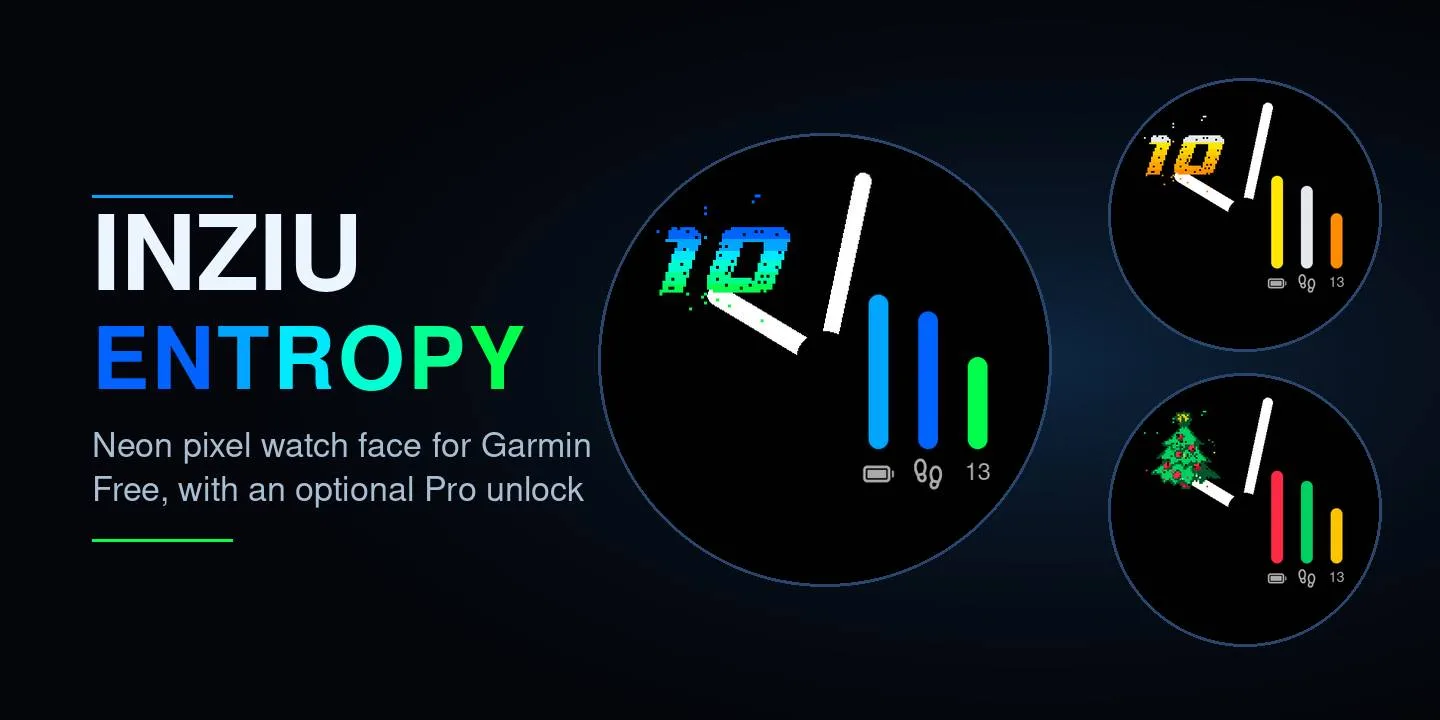
Inziu Entropy is a free watch face for Garmin watches. The hour is drawn in hundreds of small neon blocks, dissolves into digital noise minute by minute, and rebuilds itself before the next hour arrives. Almost every line behind it, on the watch, on the server and on the website, was written by an AI coding assistant, Claude from Anthropic.
What made the project work was not the number of lines the model produced. It was everything around them: the questions, the checks, the tests on a real wrist. That is where the practical application of AI differs most from the demo.
The Core of the Signal
An AI assistant can write a complete product, but it cannot look at it. The speed is real, the blind spots are too, and both are measurable.
- The AI built the watch face code, the tooling, the payment backend and the website.
- The human decided what it should feel like, kept the secrets and tested on a real watch.
- Every serious bug surfaced only in a real test, never in the code review.
A watch face that falls apart on purpose
The idea is simple to describe and fiddly to build. On the hour, the digits are razor sharp. At half past, only scattered noise remains. Then the next hour assembles itself block by block, until it locks in on the minute. Two plain hands keep the actual time.
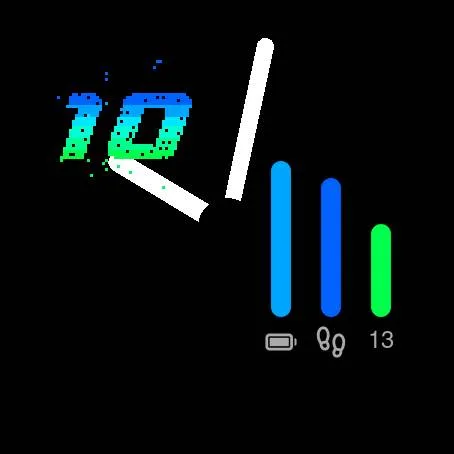
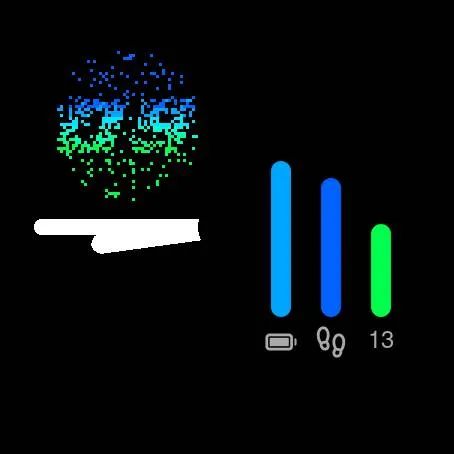
Describing that effect took a few sentences. Getting it right took dozens of rounds of screenshots, adjustments and second opinions. That ratio says a lot about where the work went.
The research contradicts itself, and both sides are right
The evidence on AI-assisted programming points in two directions at once.
| Study | Setting | Result |
|---|---|---|
| Microsoft Research, GitHub, MIT [1] | Small task: build a web server | 55.8% faster with AI |
| METR, 2025 [2] | Experienced developers, large codebases | 19% slower with AI |
The METR result carries a sting. The developers expected to gain 24 percent beforehand, and even after the slowdown they believed AI had made them about 20 percent faster.
Both findings can be true. A small, self-contained task with a clear goal suits a language model well. A huge codebase full of unwritten conventions does not. A watch face sits firmly in the first category, and the experience matched the pattern: well-defined parts went remarkably fast, while anything that depended on the maker’s taste took as long as it always does.
What the AI actually built
The work happened as one long conversation rather than a series of commands. The maker described the feel, the assistant translated it into code and tools.
- The watch face in Monkey C, Garmin’s programming language, for more than forty watch models.
- A simulator in Python that renders the watch face exactly as the watch does.
- An image generator that produces every store image and screenshot from that simulator.
- A payment backend as a small Cloudflare Worker that talks to PayPal.
- A product page in two languages, with structured data, FAQ and an unlock flowchart.
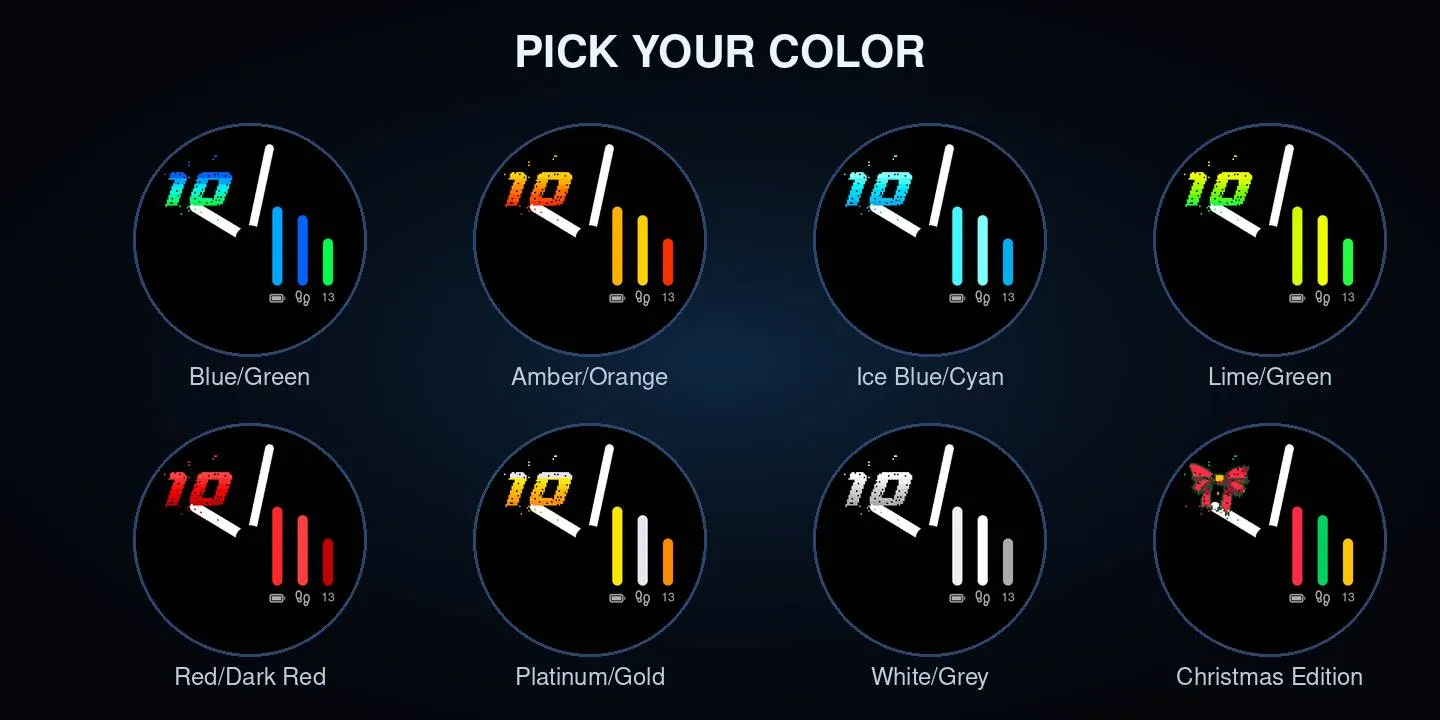
Chores that normally eat weeks of evenings, such as launcher icons in six sizes, store texts or build scripts, became a matter of minutes. That is automation in its most useful form: not replacing judgment, but clearing away everything between an idea and a working product.
Where the AI went wrong, and who noticed
Speed has a shadow side. A Stanford study presented at the ACM CCS security conference found that people using an AI assistant wrote insecure code more often in four of five tasks, and were also more confident that their code was secure [3]. Participants who stayed critical made fewer mistakes.
The Entropy project ran into exactly that kind of confident error.
- Two secrets, one product. Server and watch must share the same secret key. Several candidates were created during setup, and the server’s code did not match the watch’s. Both sides were correct on their own.
- A build script that would not run. A rewrite silently removed its permission to execute.
- A rejected file name. The Garmin compiler refused a temporary file without the right extension.
- Hands in the wrong layer. On the real watch, the hands ran in front of the icons in one version and behind them in another.
Each fix took minutes once a human saw it. None of them were visible until someone actually tried the product.
Simplicity is prerequisite for reliability.
Security that fits in one line
The unlock system shows what a model does well when the goal is precise. No accounts, no licence server, no customer database. Instead the design uses HMAC, a method from 1997 that combines a hash function with a secret key, so that only someone who knows the key can create or check a valid result [4].
Device ID  = first 40 bits of SHA-256(watch identifier)  ->  K7QM 2XRP
Code       = HMAC-SHA256(secret, "entropy:K7QM2XRP")     ->  9AF6736F
After payment the server checks with PayPal that the amount is right and computes the code. The watch does the same sum offline and compares. Nothing is stored, because the code follows from the ID. The example above uses a public test key, not the real one.
That privacy choice matters. Researchers at Oxford analysed close to a million Android apps and found that most contain third-party tracking [5]. A watch face that knows heart rate, sleep and location has every reason not to join in. The assistant proposed the architecture; the decision to collect nothing at all was human.
The details that decide trust
The most valuable corrections were about the buyer, not the code.
- Eight characters, not sixteen. Two groups of four, without the lookalike letters I, L, O and U, can be read aloud without errors.
- Forgiving input. Spaces and dashes are ignored, and a typed letter O quietly becomes a zero.
- The name on the receipt. PayPal shows the seller’s legal name, so the product page now says upfront which name will appear.
- Reinstalling is safe. The Device ID stays the same, so the original code works again.

None of these came from the AI on its own. They are the kind of usability work that requires imagining a tired person with a phone in one hand at eleven at night.
A pattern worth recognizing
Spreadsheets did not eliminate accountants; they changed what accountants spent their time on. AI coding assistants seem to follow the same curve. The typing becomes cheap. What stays valuable is knowing what to build, noticing what is wrong, and owning what ships.
For anyone starting a similar project:
- Start small and well defined, because that is where AI help clearly pays off.
- Let the AI build tools, not just features, so images and code stay in sync.
- Keep secrets and payments human, with clear names and a password manager.
- Test on the real device with a real purchase before trusting a green checkmark.
The strategy is neither blind trust nor distrust. It is treating the AI as a fast, tireless colleague who never gets bored and never once puts the watch on. A watch face that dissolves the hour into noise and rebuilds it every sixty minutes turns out to be a fitting image for that partnership: the pieces arrive fast, and someone still has to see the whole. Try Inziu Entropy on your Garmin; every pixel was checked by a human eye.
Related signals
-
How to Deploy AI Safely Despite Hallucinations Why confident AI output needs structural verification, the same lesson this project learned in code.
-
How AI Invisibly Disappears Into Our Devices Why computing locally on the device, as this watch face does, is becoming the smarter default.
References
[1] Peng S, Kalliamvakou E, Cihon P, Demirer M. The Impact of AI on Developer Productivity: Evidence from GitHub Copilot. arXiv. 2023. Available from: https://arxiv.org/abs/2302.06590
[2] Becker J, Rush N, Barnes E, Rein D. Measuring the Impact of Early-2025 AI on Experienced Open-Source Developer Productivity. METR. 2025. Available from: https://metr.org/blog/2025-07-10-early-2025-ai-experienced-os-dev-study/
[3] Perry N, Srivastava M, Kumar D, Boneh D. Do Users Write More Insecure Code with AI Assistants? Proceedings of the 2023 ACM SIGSAC Conference on Computer and Communications Security (CCS ‘23). 2023. Available from: https://arxiv.org/abs/2211.03622
[4] Krawczyk H, Bellare M, Canetti R. HMAC: Keyed-Hashing for Message Authentication. RFC 2104. Internet Engineering Task Force; 1997. Available from: https://www.rfc-editor.org/rfc/rfc2104
[5] Binns R, Lyngs U, Van Kleek M, Zhao J, Libert T, Shadbolt N. Third Party Tracking in the Mobile Ecosystem. Proceedings of the 10th ACM Conference on Web Science (WebSci ‘18). 2018;23-31. Available from: https://arxiv.org/abs/1804.03603